

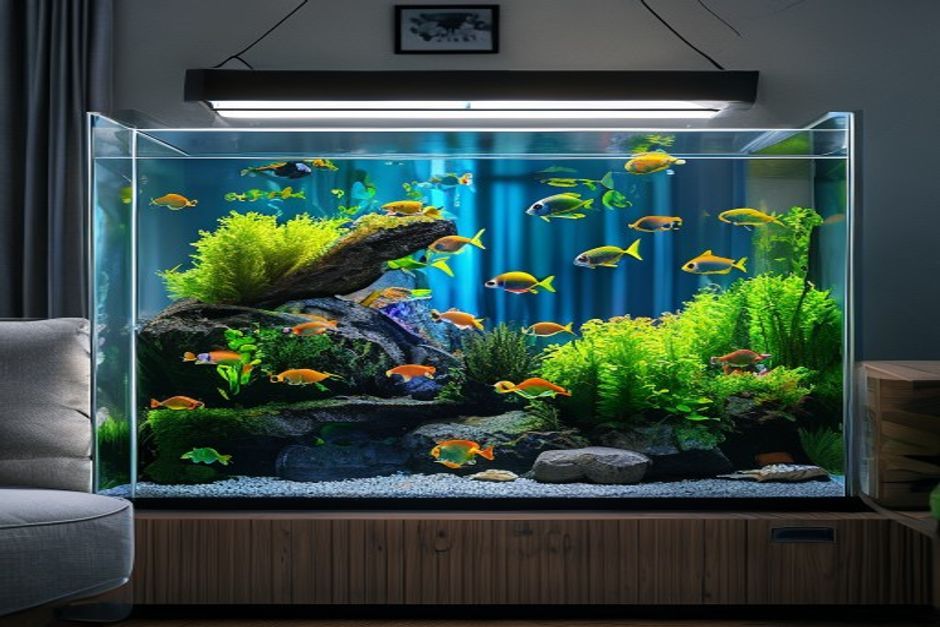
Best Fish for a 20-Gallon Tank: Stocking Ideas and Combos
A 20-gallon tank is one of the most popular aquarium sizes for good reason. It's large enough to create a proper ecosystem with a real community of fish, but small enough to be manageable on a beginner's budget and shelf space.
The tricky part? Knowing what to put in it. There are thousands of fish species, and plenty of them will end up miserable (or make your other fish miserable) in a 20-gallon setup.
How Many Fish Can Go in a 20-Gallon Tank?
The old "one inch of fish per gallon" rule gives you a starting estimate of around 15-20 inches of fish total. But it's a rough guide, not a hard rule.
A better approach: think in terms of bioload. Messy fish like goldfish produce far more waste per inch of body than clean fish like tetras. Your filtration capacity, plant coverage, and tank shape all play a role.
For a 20-gallon tank, a realistic stocking target for beginners is:
- 10-15 small community fish (under 2 inches)
- Or 6-8 medium fish (2-3 inches)
- Or one centerpiece fish + a small school + bottom dwellers
The magic formula: overfilter, understock, and watch your water parameters. A properly cycled tank can handle more fish than an unstable one every time.
The Best Fish for a 20-Gallon Tank
1. Neon Tetras — The Classic Choice
You can't go wrong with neon tetras. These 1-inch schooling fish are vibrant, peaceful, and thrive in groups. Keep at least 6 together for natural schooling behavior — they're much happier and more active in numbers.
How many: 8-12 neon tetras comfortably fit in a 20-gallon, leaving room for bottom dwellers.
2. Corydoras Catfish — Essential Bottom Crew
Corydoras are gentle, social catfish that spend their lives vacuuming up leftover food from the substrate. They're great tank-mates for virtually any community setup. Keep them in groups of at least 4-6 — they're social and show visible stress when kept alone.
How many: A group of 4-6 corydoras pairs perfectly with a school of tetras in a 20-gallon.
3. Platies — Colorful and Hardy
Platies are livebearers that come in dozens of color forms — sunset, mickey mouse, blue coral, and more. They're extremely hardy and one of the best fish for first-time tank owners. Fair warning: they breed readily, so stick to one sex if you don't want a population explosion.
How many: 5-6 platies work well in a 20-gallon, especially with some plants to hide fry.
4. Guppies — The Beginner Favorite
Guppies are fast, colorful, and endlessly active. Male guppies have extravagant tails and display constantly to each other and to females. Like platies, they breed easily — consider an all-male group to avoid a population overrun.
How many: 8-10 guppies fit well, or 5-6 if mixing genders with a plan for fry.
5. Dwarf Gourami — Stunning Centerpiece Fish
If you want a "wow" fish that becomes a tank centerpiece, the dwarf gourami delivers. Males are brilliantly colored — electric blue, flame red, or neon blue — and they're peaceful enough for community tanks when not kept with other gouramis.
How many: 1 male dwarf gourami + a small school of tetras or corydoras fills a 20-gallon beautifully. Don't keep two males together.
6. Endlers — The Compact Livebearer
Endlers look like tiny, hyper-colored guppies. Males max out around 1 inch and are packed with personality. They're incredibly active and do well in densely planted tanks. A great choice if you want activity and color without committing to larger fish.
How many: 10-15 endlers in a 20-gallon with live plants is a stunning setup.
Three Proven 20-Gallon Stocking Combos
8× Neon Tetras + 5× Corydoras Catfish
Simple, peaceful, great for beginners. Very forgiving.
5× Platies + 5× Guppies (same sex) + 4× Corydoras
Colorful, active, and easy to care for.
1× Dwarf Gourami + 8× Neon Tetras + 5× Corydoras
Beautiful focal point with a supporting cast. Stunning results.
Fish to Avoid in a 20-Gallon Tank
These species are commonly sold at pet stores but are not suitable for a 20-gallon setup:
- Goldfish — Need 40+ gallons and are extremely messy
- Bala sharks — Grow to 12+ inches and need very large tanks
- Common plecos — Grow to 18-24 inches
- Oscars — Grow to 12+ inches and have very high bioload
- Jack Dempseys or Green Terrors — Aggressive cichlids that need space
- Tiger barbs in groups under 8 — Become aggressive fin-nippers
Setting Up Your 20-Gallon for Success
The fish you choose are only half the equation. Your filtration and tank cycling matter just as much.
For a 20-gallon tank, you want a filter rated for at least 150-200 GPH (gallons per hour) — that's 7-10× tank volume turnover per hour. This gives you a meaningful buffer as your bioload grows.
And before adding any fish: cycle your tank first. A properly cycled nitrogen cycle means the difference between fish thriving and dying within days. Test with an API Freshwater Master Test Kit until ammonia and nitrite both read 0 ppm before adding any livestock.
Essential: Test Before You Stock
Don't guess at your water chemistry — the API Freshwater Master Test Kit tests ammonia, nitrite, nitrate, and pH with lab-grade accuracy. It's the single most important tool a new fishkeeper can own.
View on Amazon →Use the Calculator to Double-Check Your Numbers
Before finalizing your stocking plan, confirm your actual water volume. A "20-gallon" tank with thick substrate and a large rock formation might only hold 16 gallons of water — which changes your stocking math.
Related Guides
- Fish Per Gallon: Stocking Rules Explained — Understand bioload and stocking limits beyond the basic inch-per-gallon rule.
- How Many Fish in a 10-Gallon Tank? — Stocking plans and species picks for the most popular starter tank size.
- How to Cycle a New Aquarium — Set up a healthy nitrogen cycle before adding any fish.
- Aquarium Filter Guide — Pick the right filter to handle your 20-gallon community.